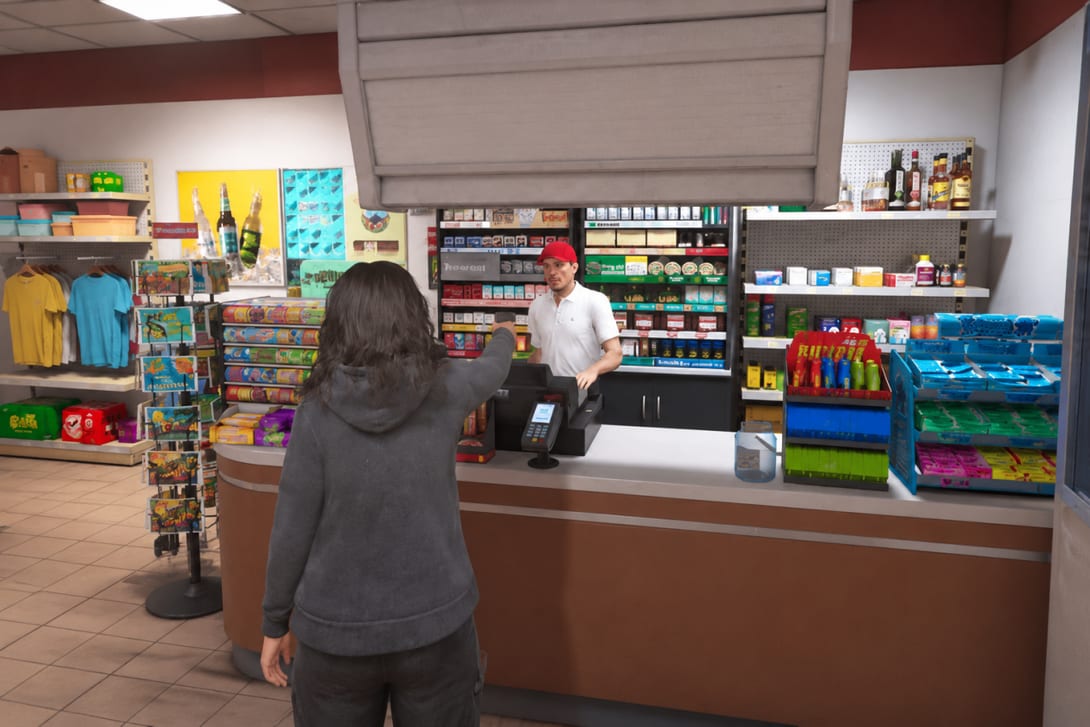
GTA 6 Store Stick-Ups Guide: All Robbery Locations and Payouts
Store stick-ups are among the earliest money-making activities available in GTA 6. Jason and Lucia can rob small businesses across Leonida, including convenience stores, liquor stores, fast-food restaurants, and gas station shops. The activity is separate from bank jobs, jewelry robberies, and stolen-goods sales, so it uses a simpler process built around the cash register and a quick escape.
Players searching for GTA 6 Accounts may see guides listing individual stores, estimated takes, and completion requirements. The most reliable way to track these robberies is the in-game map. Open the robbery filter and select Stick Ups. This shows the locations that count toward the robbery category, while the general food and drink filters may display businesses that are not part of the same completion count.
The game tracks 91 Stick Up locations, with 50 required for the relevant 100% completion objective according to the current completion tracker. The stores are available early, but their layouts, security features, escape routes, and available cash are not identical.
Which Stores Can Be Robbed?
The Stick Ups category covers three main types of businesses. Each type has a different interior layout and may require a slightly different approach.
| Business type | Main target | Common risks |
| Convenience stores | Cash register and possible rear-area money | Cameras, narrow interiors, nearby police |
| Liquor stores | Register and selected extra pickups | Limited cover, close street access |
| Fast-food restaurants | Front counter register | Crowded entrances and exposed exits |
Gas stations often include a small convenience shop. The fuel pumps are not the robbery target. Enter the attached store and look for the employee behind the counter.
Fast-food robberies are usually easier to understand because the register is positioned in the front service area. Liquor stores can have more restricted movement around the counter, while convenience stores may include a rear office or storage section that takes longer to search.
How to Find Every Stick Up Location
The game does not require players to memorize every business name before starting the activity. The robbery map provides the practical checklist.
Using the Map Filter
Follow these steps to locate the available targets:
- Open the world map.
- Select the Robberies category.
- Choose Stick Ups.
- Zoom into the area you want to search.
- Set a waypoint to a marked store.
- Check the target again after completing the robbery.
The robbery filter is more useful than searching for every blue store icon. The food and drink categories can show businesses that are available for normal visits but do not count as separate Stick Up entries.
Regional Route Planning
Store robberies are spread across Leonida, including dense urban areas, coastal communities, rural roads, and smaller towns. A short route through nearby businesses is more efficient than crossing the entire map between targets.
| Area type | Strength | Main drawback |
| City districts | Several stores can be reached quickly | Traffic, witnesses, and police response |
| Coastal areas | Open roads and clear sightlines | Longer travel between targets |
| Rural towns | Easier exits and less traffic | Fewer stores in one route |
| Gas station corridors | Simple approach and recognizable layouts | Limited escape options near major roads |
Before entering a store, identify the nearest road and decide where the getaway vehicle will go. The quickest robbery can still become expensive if the exit sends you directly into traffic or a police response.
The Standard Store Robbery Process
A basic stick-up is built around the cashier and the register. The exact button prompt depends on the platform and control settings, so follow the interaction shown on screen.
The normal sequence is:
- Park near the store with the vehicle facing the intended exit.
- Enter and locate the cashier.
- Aim at the employee to begin the hold-up.
- Keep the employee under control until the register is opened.
- Collect the cash from the counter.
- Check whether the location has a worthwhile secondary objective.
- Leave before the police response becomes difficult to manage.
The register is the guaranteed objective of a regular store robbery. A rear office, safe, or extra cash pickup should be treated as a separate decision. Staying inside for a few more seconds can increase the amount collected, but it also gives cameras, witnesses, and responding officers more time to create problems.
How Convenience Store Robberies Work
Convenience stores are the most common Stick Up targets. Their interiors usually place the cashier close to the entrance, which makes a quick register robbery possible.
A short run is suitable when:
- The store has no visible rear office.
- The map estimate is modest.
- The entrance opens directly onto a busy road.
- You are completing several nearby targets.
- The police response begins before you finish searching.
Some convenience stores have additional money away from the register. Look for a back room, office, or locked container only after the cashier interaction is complete. Do not assume every branch has the same layout just because two stores use similar branding.
A useful habit is to inspect the shop during a normal visit before starting the robbery. Check the position of the counter, the entrance, and any rear doorway. This reduces the time spent looking around while the robbery is active.
Liquor Store Robbery Locations and Tactics
Liquor stores are listed separately from convenience stores in the general business filters, but they count as the same type of free-roam robbery activity under Stick Ups.
Their compact interiors create two common problems. The cashier may be close to the doorway, and there may be little room to move once the robbery starts. A vehicle parked directly outside can also block your own exit.
For a liquor store robbery:
- Leave enough space for the getaway vehicle.
- Avoid stopping across the only clear road.
- Keep the front entrance in view while checking the counter.
- Take the register money before searching for extra loot.
- Leave immediately if the police response begins.
A liquor store may show a larger estimated value because of additional cash or a secondary pickup. That figure should not be treated as the amount sitting inside the register. Compare the cash collected at the counter with any money found elsewhere.
Fast-Food Counter Robberies
Fast-food restaurants are often the simplest stores to rob because the service counter is easy to identify. Enter the restaurant, aim at the staff member, collect the register money, and leave through the same entrance unless the layout provides another route.
The main danger is visibility. Restaurants near busy streets can expose the player to customers, pedestrians, and passing vehicles as soon as the robbery ends. A quick exit matters more than searching a small restaurant for a few extra bills.
Fast-food targets are useful for completion progress because they can be added to a route with nearby convenience stores. They are less attractive for repeated cash runs when the trip to the next target takes longer than the robbery itself.
Payouts and Estimated Take
GTA 6 does not give every store a universal fixed reward. The amount can vary according to the location, the items collected, and whether the robbery includes a back-room objective.
The payout can be separated into several parts:
| Cash source | Meaning |
| Register money | Cash taken directly from the employee’s till |
| Secondary cash | Money found in an office, back room, or other accessible area |
| Safe contents | Additional valuables available at selected locations |
| Map estimate | The game’s approximate value for the selected target |
The amount displayed on the map should be used for route planning. It is not proof that the register alone will produce that total. A store with a higher estimate may require more time, expose the player to more witnesses, or include a more difficult escape.
For accurate comparisons, record each run in three parts:
- Register cash
- Extra cash or valuables
- Time required to leave the area
This gives a clearer picture of the real value of a robbery. A lower-paying store beside an open road may be more efficient than a higher-paying target surrounded by traffic and witnesses.
Cameras, Witnesses, and Security
Store robberies can include more than a cashier standing behind a counter. Some locations use CCTV, and other people inside or outside the business may react to the crime.
Before starting the hold-up, look for:
- A camera covering the register
- A camera near the entrance
- A rear office
- A locked door or safe
- Customers who can report the robbery
- A road with enough space for a clean escape
Destroying a camera may reduce one source of evidence, but it can also make the robbery take longer and create additional noise. The safest method depends on the store layout. A camera in a rear room may be worth dealing with if you plan to take the extra cash. It is rarely worth delaying a quick register robbery just to search an area with no visible reward.
Masks, clothing, and vehicle choice can also affect how easily the player leaves the area without being recognized. Do not wait inside the store after the register is empty unless there is a clear reason to continue.
Choosing Between a Quick Robbery and a Full Search
The register-first method is the safest way to complete a large number of Stick Ups. It is especially useful for players working toward the 50-store completion requirement.
A full search makes more sense when:
- The map shows a higher estimated value.
- The store has an obvious office or safe.
- The additional objective is close to the register.
- The entrance and getaway road are easy to control.
- You are not under immediate police pressure.
A quick robbery is better when:
- The store has a narrow entrance.
- The police response begins early.
- There are several witnesses nearby.
- The extra loot is unclear.
- The next target is only a short drive away.
Avoid searching every room simply because the door is open. Store stick-ups reward clear decisions. Take the register money, judge the remaining risk, and leave when the added cash no longer justifies the exposure.
Repeating Store Robberies
Completed Stick Ups can become available again after the location resets. The exact timing can vary, so players should use the map rather than rely on a fixed number of in-game hours.
Repeated robberies are more useful when organized into small routes. Select several stores in the same region, complete the quickest targets, and return to the map after the route ends. If a store remains unavailable, move to another marked location instead of waiting beside the entrance.
A practical repeat route should record:
- The store name and area
- The register amount
- Any secondary cash collected
- The time spent inside
- The direction of the escape
- Whether the store was available again later
This record helps separate a genuinely efficient target from a store that only looked profitable because its map estimate included extra loot.
Store Robberies and GTA 6 Account Progress
Players comparing GTA 6 Accounts for sale may see different claims about robbery progress, payouts, and completed activities. Those claims should be checked against the save file, because the Stick Up counter tracks completed locations rather than simply counting every store visit.
For completion purposes, use the in-game robbery filter as the main checklist. Choose 50 distinct Stick Up locations, confirm that each robbery is recorded, and avoid counting the same store twice after it reopens. A reopened business may be useful for cash, but it does not replace an uncompleted location in the progress tracker.
The most reliable store route starts with quick register robberies in areas that have open roads, then adds rear-room searches only when the extra value is visible. Park with the exit in mind, collect the counter cash before investigating anything else, and leave as soon as the risk begins to outweigh the additional payout.